One Pan Too Many
A practical guide to stainless steel, cast iron, carbon steel, and nonstick. What each does best, and which pans you actually need.
By Midnight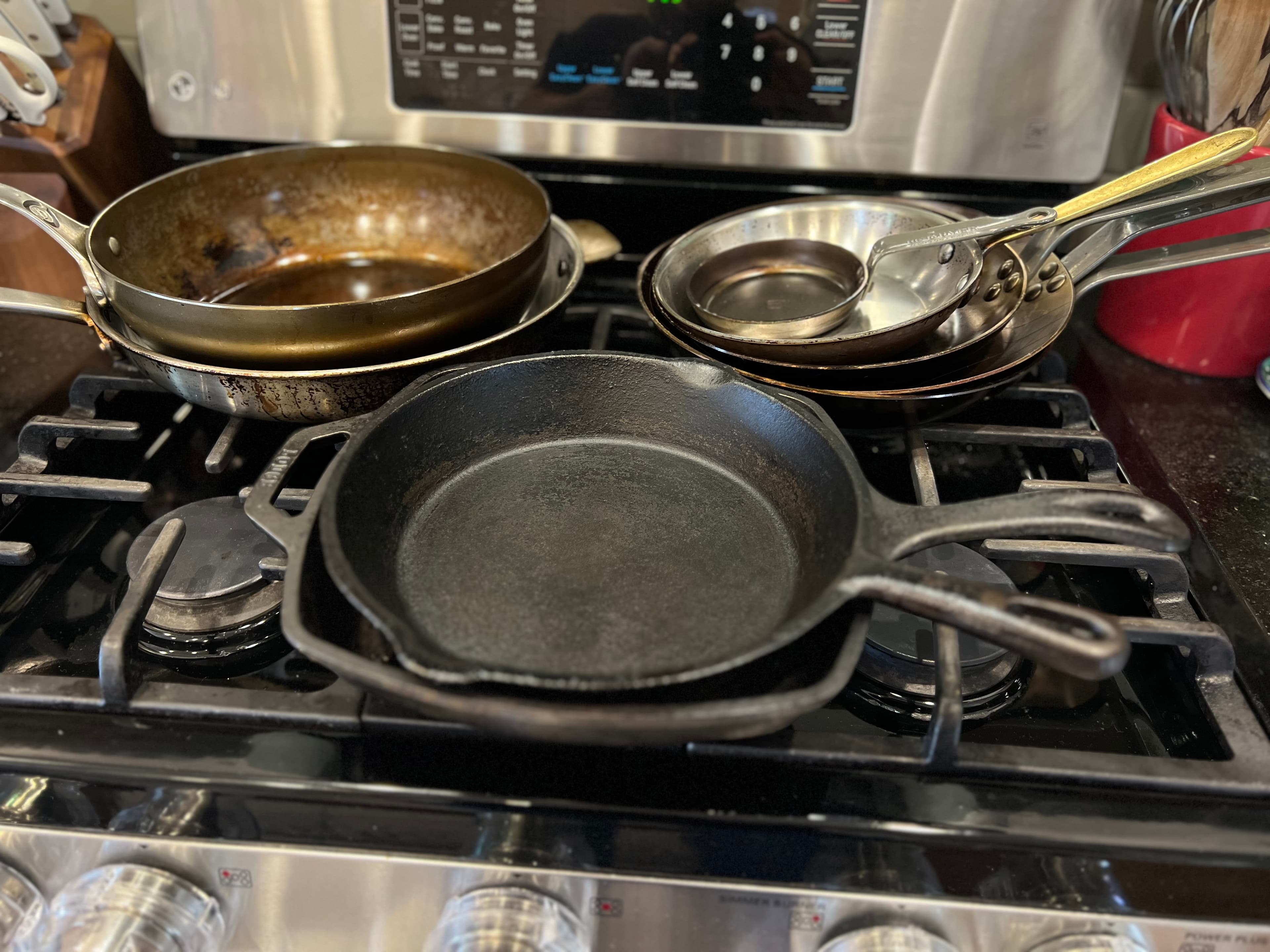
How to choose between stainless steel, cast iron, carbon steel, and nonstick, without ending up with five versions of the same damn pan.
My mom has a history of buying me kitchen gear. Knife sets, cookbooks, even a Ninja Slushi machine. So when she asked what I wanted for Christmas, I gave her what I thought was a pretty straightforward answer: a nice carbon steel pan.
I should have been more specific.
The packages started showing up. Then they kept showing up.
By the time Christmas was over, I had something like five de Buyer carbon steel pans in various shapes and sizes. FIVE. I had apparently asked for a carbon steel pan and accidentally subscribed to carbon steel pans.
Some were genuinely useful. Others were a little more specialized. And then there was this miniature pan.
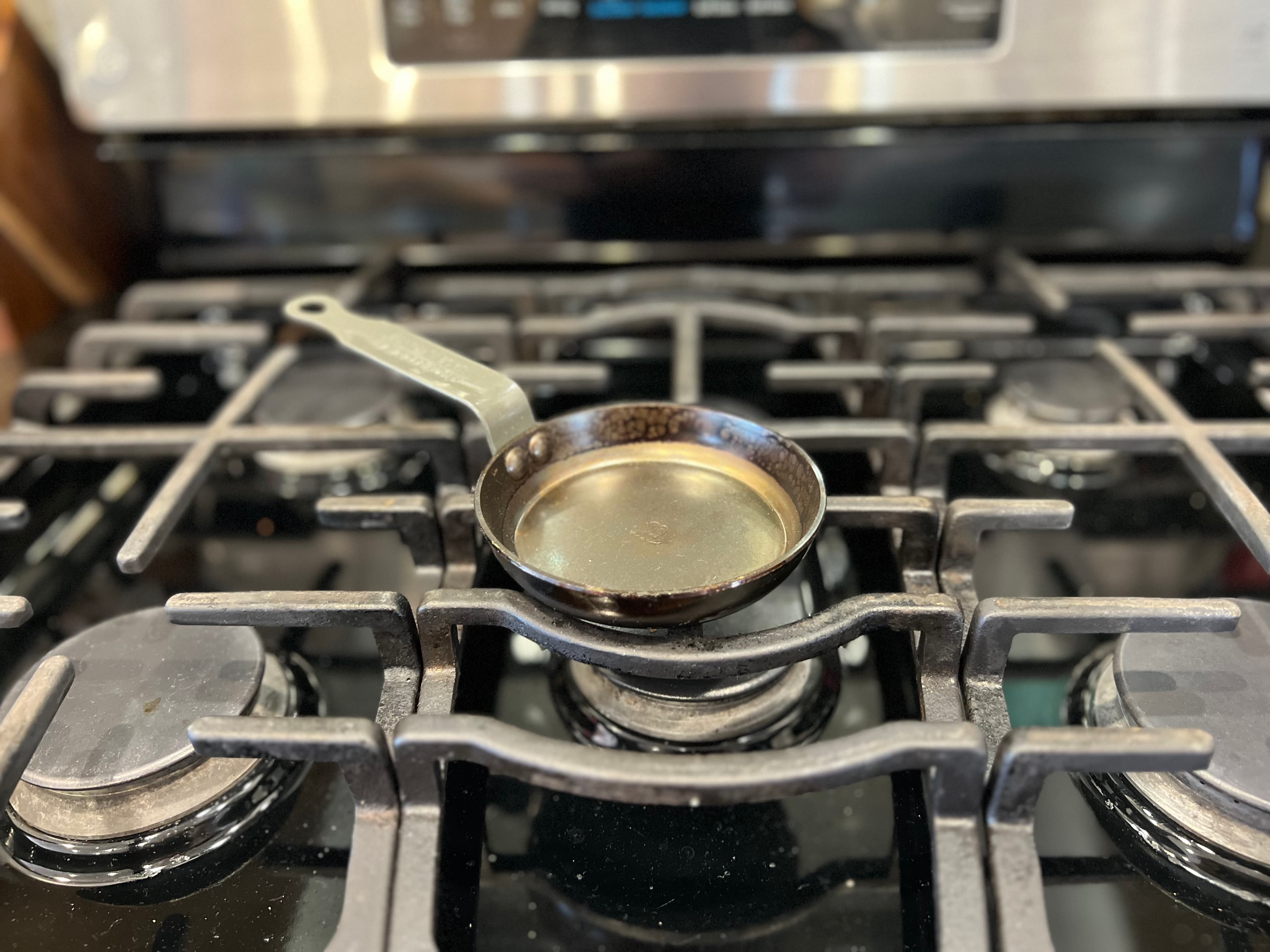
I honestly thought it was a joke.
It’s a real pan. A beautiful, tiny, extremely serious French pan designed to cook what I can only assume is one perfectly disciplined egg. I’m still not entirely sure what I’m supposed to do with it.
Then came the seasoning.
Carbon steel needs to be seasoned before you really start cooking with it. Normally, I’d throw a pan in the oven and let heat do most of the work. Except these pans had handles that I didn’t think were oven safe at the time.
So I seasoned them on the stovetop.
All of them.
One pan on the stove isn’t a big deal. Five pans turns seasoning into a part-time job. Heat the pan. Add a microscopic amount of oil. Wipe it out. Heat it again. Smoke out the kitchen. Repeat. Move on to the next pan. Question your life choices.
Somewhere around pan six, I realized something important.
Nobody needs this many pans.
More importantly, you don’t need five versions of the same pan. There isn’t one perfect material that does everything better than everything else.
The pan you want for a hard sear on a steak probably isn’t the pan you want for scrambled eggs. The one you use for a tomato-heavy pan sauce isn’t necessarily the one you want ripping hot under a broiler.
That’s what this guide is about.
Not finding the best pan. Finding the right pan.
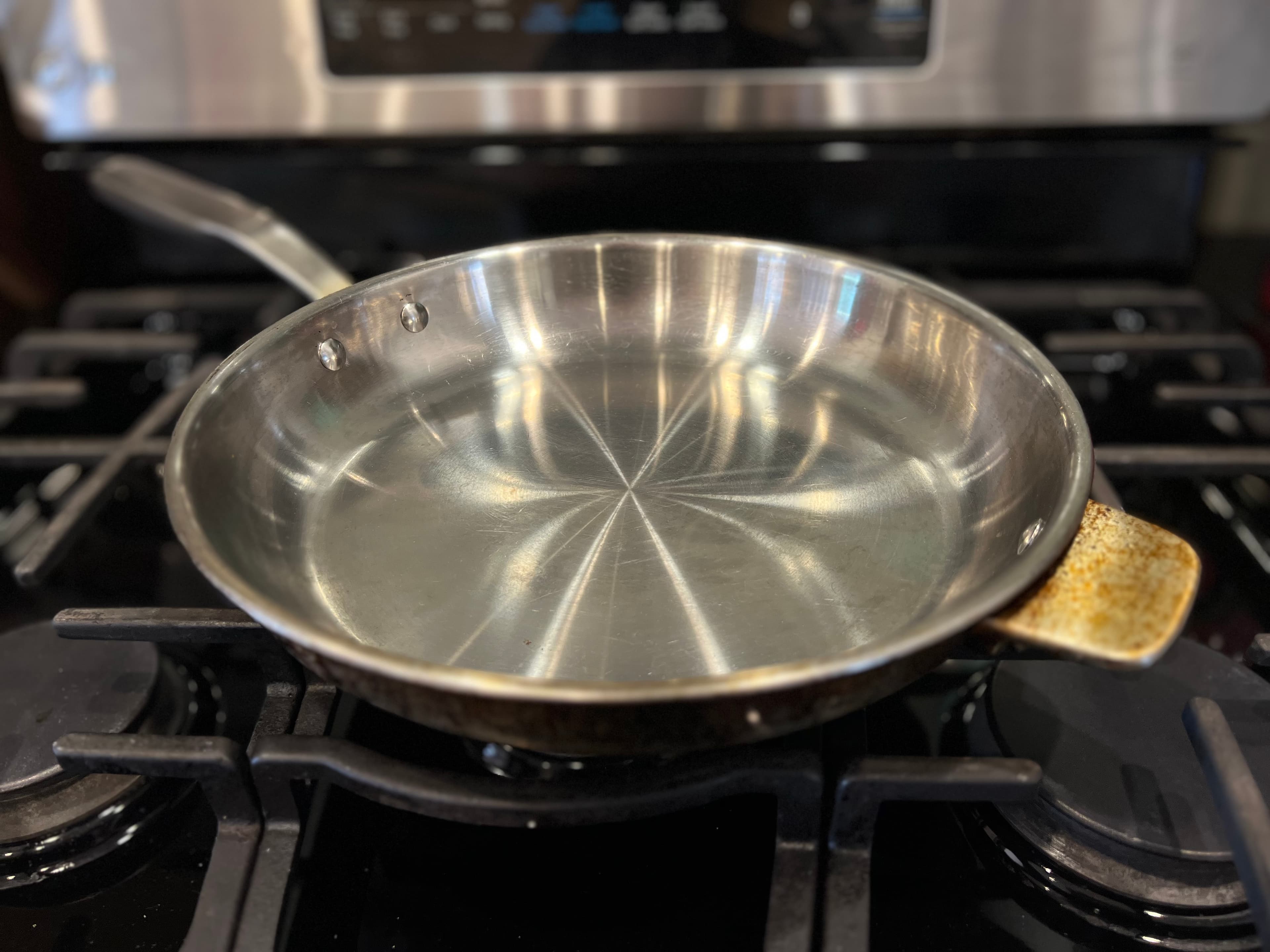
Stainless Steel
The workhorse.
If I could only keep one skillet, it would probably be stainless steel.
What It Does Best
- Searing meat
- Sautéing vegetables
- Pan sauces
- Acidic foods
- Everyday cooking
- Stovetop-to-oven cooking
Stainless can take high heat, handle acidic ingredients, make a pan sauce, and survive a pretty serious amount of abuse.
It’s also one of the few pans where food sticking can actually be useful.
Those browned bits left behind after searing meat are called fond. Deglaze the pan with wine, stock, or another liquid and you have the beginning of a pan sauce.
The Catch
Stuff sticks.
There’s a learning curve. Preheat the pan, use enough fat, and stop trying to pry meat off the surface before it’s ready to release.
Once you figure that out, stainless steel is hard to beat.
If you only buy one good skillet, this is where I’d start.
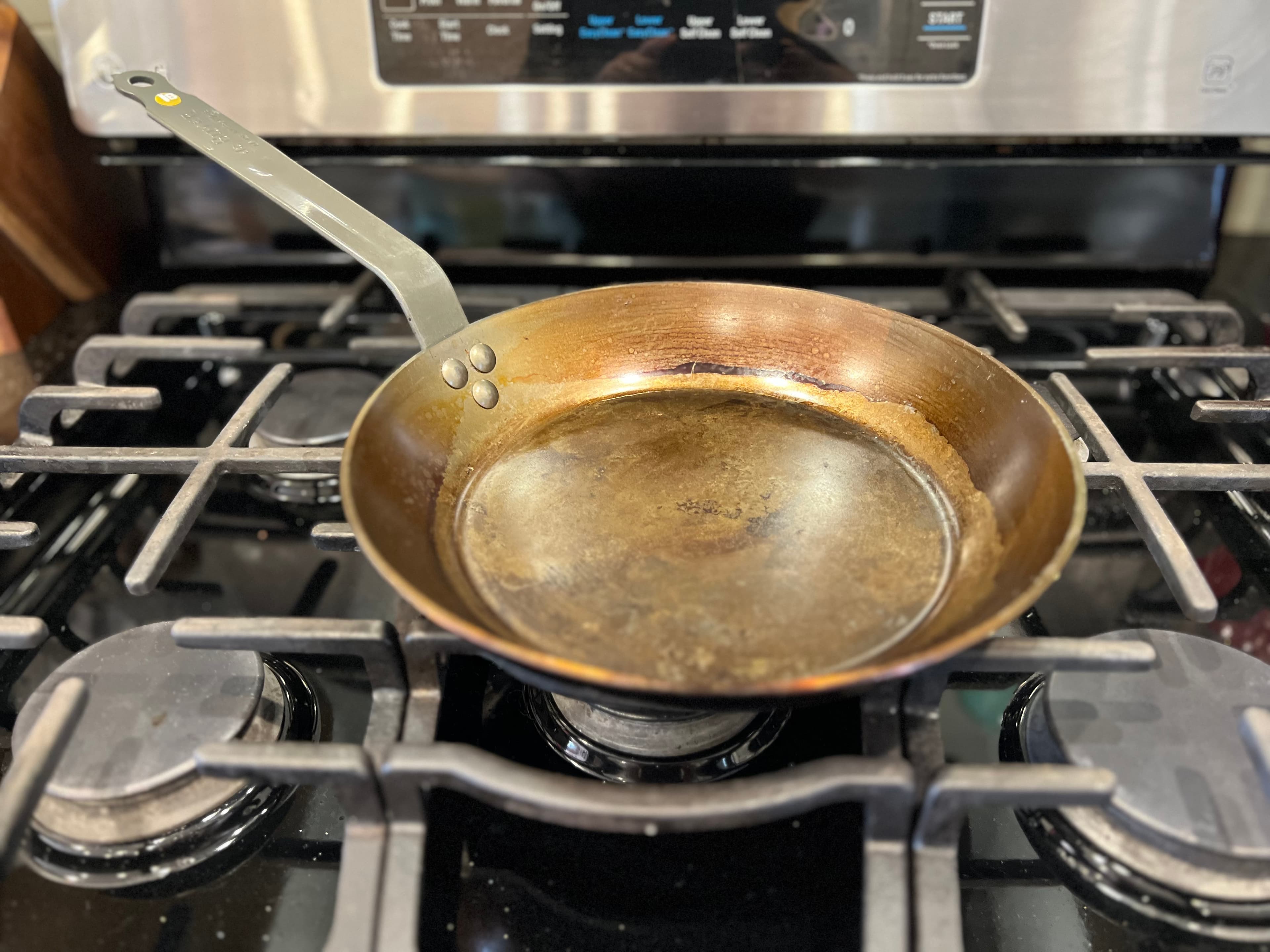
Carbon Steel
Cast iron after a diet.
Carbon steel is what started this whole mess.
It shares a lot with cast iron. It can get extremely hot, develops a naturally slick seasoned surface, and will probably outlive you.
But carbon steel is generally thinner and lighter, which means it responds to changes in heat faster than cast iron.
What It Does Best
- Steaks
- Burgers
- Fried eggs
- Potatoes
- High-heat cooking
- Sautéing
- Anything that benefits from serious browning
Once properly seasoned, carbon steel can become surprisingly slick.
The Catch
It wants some attention.
You need to season it. You need to keep it dry. And acidic ingredients like tomatoes, vinegar, and wine can strip away some of the seasoning you worked to build.
A new carbon steel pan will also look terrible surprisingly quickly.
That's normal.
It'll turn brown, black, blue, blotchy, and occasionally some color that makes you wonder if you've ruined it.
You probably haven't.
Keep cooking.
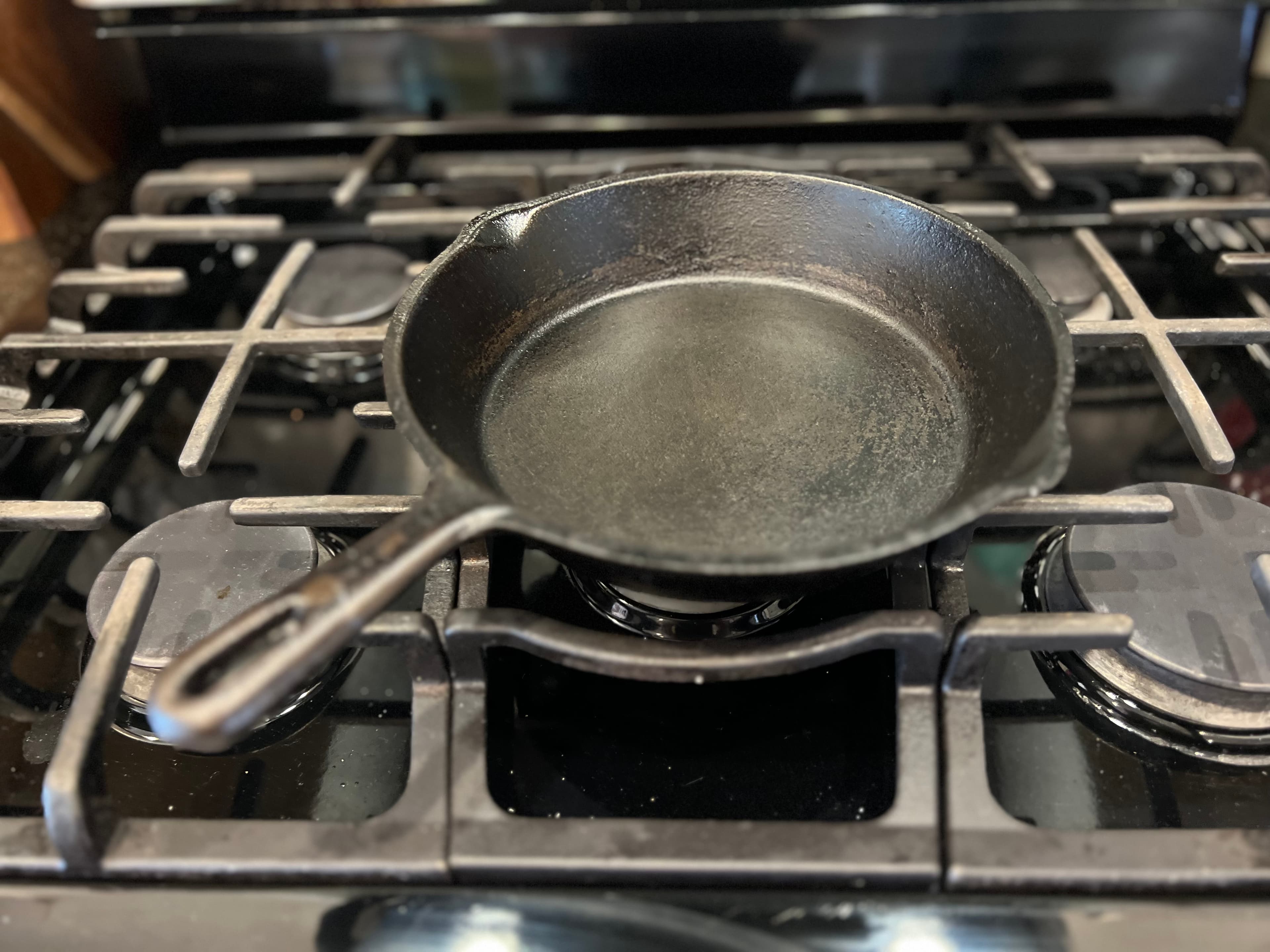
Cast Iron
Heavy, cheap, nearly indestructible.
Cast iron is carbon steel's heavier, slower cousin.
It takes longer to heat, but once it gets hot, it stays hot.
What It Does Best
- Steak
- Frying
- Cornbread
- Roasting
- High-heat searing
- Oven cooking
Cast iron also doesn't need nearly as much babying as people claim.
Yes, you can use soap.
You can scrub it. You can use metal utensils. If the seasoning gets damaged, you can fix it. If the pan gets rusty, you can fix that too.
The Catch
It's heavy.
A 12-inch cast iron skillet full of food becomes a substantial object.
It also responds slowly when you adjust the burner, which makes it less useful when you need precise temperature control.
Cast iron is excellent.
It just doesn't need to be your personality.
Nonstick
Yes, you should probably own one.
Nonstick gets treated like cheating by people who take pans too seriously.
Ignore them.
What It Does Best
- Eggs
- Pancakes
- Crepes
- Delicate fish
- Low-fat cooking
- Anything fragile
There are jobs where a slick cooking surface simply makes life easier.
Use the right tool.
The Catch
Nonstick is disposable cookware.
The coating will eventually wear out. Don't blast it over maximum heat. Don't attack it with metal utensils. And don't expect to hand it down to your kids.
That's also why I wouldn't spend a fortune on one.
Buy a decent nonstick skillet. Treat it reasonably well. Use it for the things it does best.
Replace it when the coating starts to go.
Cast Iron vs. Carbon Steel
These two overlap more than anything else on this list.
If you already own one and love it, you probably don't need the other.
Choose cast iron if you want something inexpensive, incredibly durable, and excellent at retaining heat.
Choose carbon steel if you want something lighter, faster to respond, and easier to toss around on the stove.
Both need seasoning. Both can handle serious heat. Both can last decades.
You don't need six of each.
Trust me.
So, Which Pans Do You Actually Need?
After accidentally ending up with enough carbon steel to outfit a small restaurant, my answer is surprisingly boring.
You probably need fewer pans than you think.
For most kitchens, I'd start with:
- 10 to 12-inch stainless steel skillet
Your everyday pan.
- 10 to 12-inch cast iron or carbon steel skillet
Your high-heat pan.
- 8 to 10-inch nonstick skillet
Your eggs-don't-need-to-be-difficult pan.
That's it.
Three pans will handle an enormous percentage of what you cook on a stovetop.
Everything after that is specialization, preference, or your mother misunderstanding the assignment.
And if she asks what you want for Christmas?
Specify a quantity. ```